

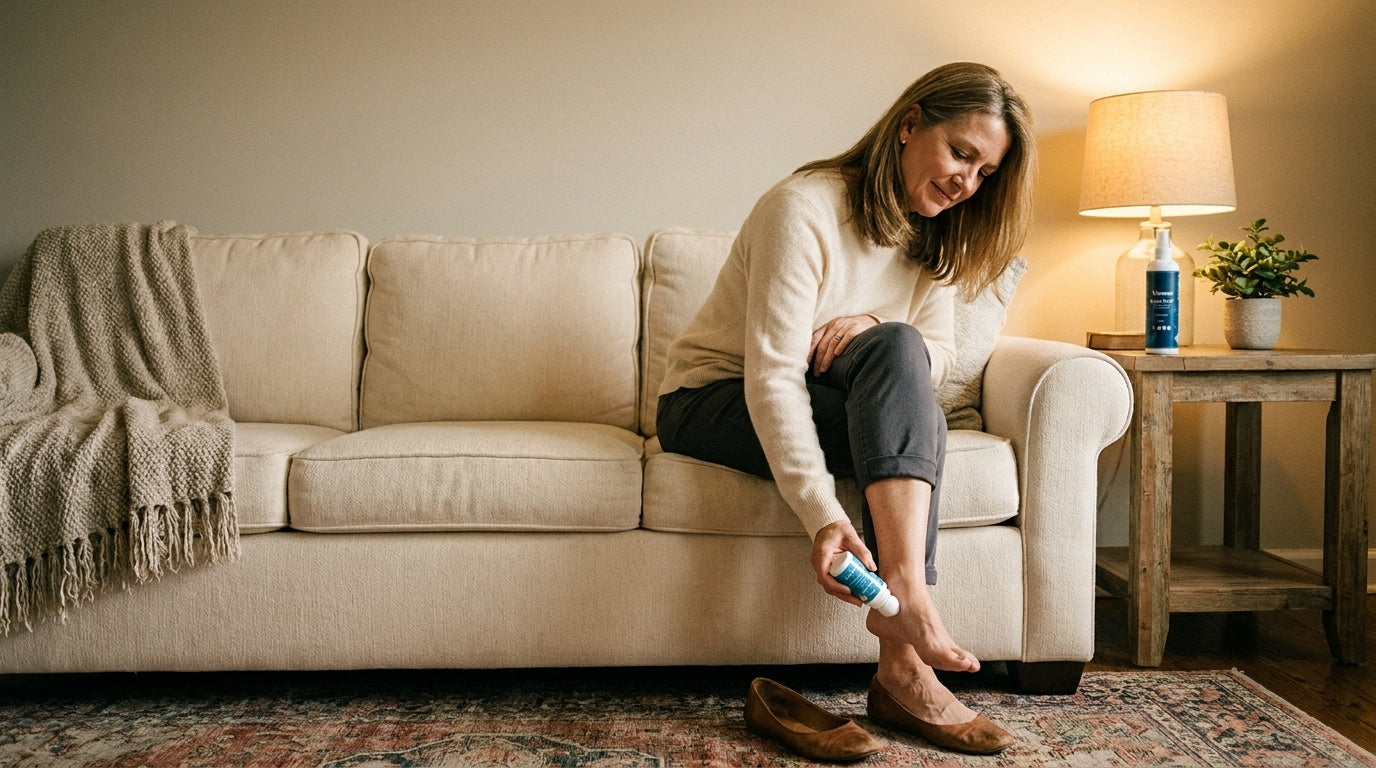
You take your shoes off at the end of the day and your feet feel like they've been through a small war. Heels ache. Arches burn. The bottoms of your feet feel tight, hot, and just done. You're not imagining it. Your feet really are working harder than they used to.
Here's what most people don't realize about feet after 50. They go through real physical changes that nobody warned you about. The cushioning thins out. The skin gets a little drier. Circulation slows down a step or two. Combine that with whatever your day actually demands of you, walking the dog, working a job, chasing grandkids, standing in line at the hardware store, and your feet are doing a lot more work with a little less support.
Good news. None of this means you have to slow down. A simple daily foot recovery routine can take most of the edge off, and it doesn't require a single trip to the podiatrist if you don't already need one. This guide walks through what's actually changing in your feet after 50, the daily routine that makes the biggest difference, and how to make it stick without turning your evening into a self-care project.
Why Your Feet Feel Different After 50
The first thing to know is that this isn't a personal failing. It's biology. Several real changes happen to feet over time.
According to research published in the National Library of Medicine, frequent foot problems affect roughly one in four adults over 65, and the percentage climbs from there. The fat padding on the bottom of your feet starts to thin, ligaments stretch a bit, and the soft tissue gets slower to bounce back after being compressed. Translation: your feet absorb shock less efficiently than they did at 35.
Add a few more factors and the picture sharpens:
• Circulation slows. Less blood flow to the feet means slower recovery from a long day.
• Skin gets drier. This contributes to cracks, calluses, and that uncomfortable tight feeling.
• Joints stiffen. The small joints in the feet lose some range of motion, especially first thing in the morning.
• Daily mileage adds up. If you've been on your feet for decades, the wear is real.
The American Geriatrics Society makes a simple but important point: foot pain is common as you age, but you don't have to put up with it. Most everyday foot tension responds well to consistent daily care.
The Piece Most Foot Care Advice Misses
Most articles about foot care after 50 stop at "wear better shoes and see a podiatrist." Both are great advice. Neither one addresses what your feet are doing between those podiatrist visits or after you take your supportive shoes off at the end of the day.
This is where daily recovery comes in. Not a 30-minute spa ritual. Not a complicated regimen. Just two or three small habits that take less than five minutes total and make a noticeable difference in how your feet feel by tomorrow morning.
Most podiatrists will tell you the same thing: the patients who do best are the ones who take care of their feet daily, not the ones who only think about their feet when something hurts.

The Daily Foot Recovery Routine
Here's a simple framework you can use. Adjust it to your day. The goal is consistency, not perfection.
1. The Morning Wake-Up (60 seconds)
Before you put your feet on the floor, do a few slow ankle circles in bed. Five each direction, both feet. Then flex and point your toes ten times. This wakes up the small joints and gets blood moving before you ask your feet to support your body weight.
Why this matters: your feet have been still all night. Adding that first 60 seconds of movement helps you avoid the morning stiffness that derails the rest of your day.
2. The Daytime Refresh (2 minutes)
If you're on your feet for work or running errands all day, your feet need a midday check-in. This is where targeted recovery becomes essential. The Xtreme Rapid Relief Roll-On is built for exactly this kind of moment. The rollerball applies both product and pressure at once, which makes it easy to refresh tight spots on the arch, ball of the foot, or sides without bending down for a long massage. Roll across the tight areas for 30 seconds and you're done.
This works especially well for adults dealing with neuropathy-related tightness, foot tension from long days, or that locked-up feeling in the arches after standing for hours.
3. The End-of-Day Reset (3 minutes)
This is the most important habit in the whole routine. After you take your shoes off, give your feet a real reset. Sit down. Apply the Xtreme Rapid Relief Rx Spray across the tops of your feet, up the calves, and down to the heels. The spray format is the easiest way to cover the broad areas your hands can't reach without strain. No bending, no fuss. Spray, let it absorb, done.
Then take one foot at a time and roll it slowly over a tennis ball, lacrosse ball, or even a frozen water bottle for 60 seconds. This is mobility work for the tissue along the bottom of the foot. Switch sides.
Finish with a short walk around the house, even just 20 steps. The light movement after the reset helps the recovery effect last into the evening.
4. The Weekly Deeper Care
Once or twice a week, add a foot soak with warm water for 10 minutes. Dry thoroughly, especially between the toes, and apply a foot-friendly moisturizer to the heels and bottoms of the feet. This handles the dry skin piece that creeps up over time.
For Stubborn Spots: The RX Balm Step Up
If you've been using the Rapid Relief Balm and feel like a specific spot needs more, the Xtreme RX Rapid Relief Balm is the extra-strength version your podiatrist is most likely to recommend. Built at 1000 mg CBD for clinical workflows, it's the formula doctors reach for when patients deal with persistent tightness in the feet, hands, knees, or shoulders. Same cooling-to-warming botanical stack as the retail Balm. Stronger CBD concentration. Same simple application: massage a thin layer into the area, give it 30 seconds, and you're done. The RX line is sold in podiatry offices across the US, which is why most people first hear about it from a podiatrist or chiropractor before they ever see it in retail. If your daily foot recovery routine has been doing 80% of the work but a stubborn spot keeps coming back, this is the step up worth asking about.

Making the Routine Stick
Most people start a foot care routine, do it for four days, and then forget. Here's how to keep that from happening to you.
Tie the routine to existing habits. The morning wake-up happens before your feet hit the floor. The daytime refresh happens at the same time you take your afternoon break. The end-of-day reset happens the moment you take your shoes off. Habits stick when they're attached to triggers you already do without thinking.
Keep the tools where you'll use them. Put the Roll-On in your bag or desk drawer. Keep the Spray near where you take your shoes off. If you have to walk to another room to find your products, the routine dies quickly.
Count days, not minutes. Getting through the routine in two minutes is better than skipping it for a thirty-minute version you never do. Consistency wins.
If you want more on building small daily habits that actually hold, check out our guide to movement snacks, which covers a similar approach for full-body recovery. The foot routine is essentially the same logic, focused on one specific area.
When Daily Recovery Isn't Enough
This is important: a daily foot recovery routine helps with everyday tension, soreness, and the normal wear of being a person over 50. It does not replace medical care when you need it.
Per Harvard Health guidance on foot care, you should see a podiatrist if you notice any of the following:
• Persistent pain that doesn't improve with rest or daily care
• Numbness, tingling, or burning that lasts more than a few days
• Swelling, color changes, or sores that won't heal
• Sharp, localized pain that hurts to put weight on
• Any foot symptoms if you have diabetes or circulation issues
The daily recovery routine works alongside professional care, not instead of it. Most podiatrists are happy when their patients take active care of their feet between visits. It often means appointments can focus on bigger questions instead of basic maintenance.
Why a Targeted Recovery Approach Works for Feet
Feet are unique. They take more direct impact than almost any other part of your body, they're hard to reach with your hands, and the tissues respond well to a combination of pressure and topical support. That's why the Roll-On and Spray combination works so well for daily foot recovery.
The Roll-On gives you focal pressure where you need it. The rollerball acts like a small massage tool that distributes product across the tight spots while delivering gentle pressure. For arches, heels, the ball of the foot, and the sides, this is the cleanest way to apply both product and movement at the same time.
The Spray handles the broader work. Tops of feet, ankles, calves, and the back of the legs all benefit from broad-area recovery support, especially after a long day. The spray format means no bending, no scrubbing in product with your hands, no mess. Just clean coverage where you need it.
Used together, they cover everything from focal tension spots to full lower-leg recovery in about three minutes total.
The Bottom Line
Tired feet after 50 aren't a sign that you need to slow down. They're a sign that your feet are asking for a little more attention than they used to. A consistent daily recovery routine, combined with the right tools and decent shoes, handles most of what people complain about.
The whole routine takes about five minutes a day. Morning wake-up, daytime refresh, end-of-day reset. Three small habits that protect everything you ask your feet to do.
That's exactly what Xtreme Rapid Relief is built for. Clean, fast-acting recovery tools designed to fit into real life. Browse the Rapid Relief lineup to find the pieces that fit your daily routine.
FDA Disclaimer: These statements have not been evaluated by the Food and Drug Administration. This product is not intended to diagnose, treat, cure, or prevent any disease.
Share:
Movement Snacks: The 5-Minute Recovery Habit That Keeps You Moving After 45
Weekend Warrior Recovery: How to Garden, Mow, and Move All Day Without Paying for It Tomorrow