

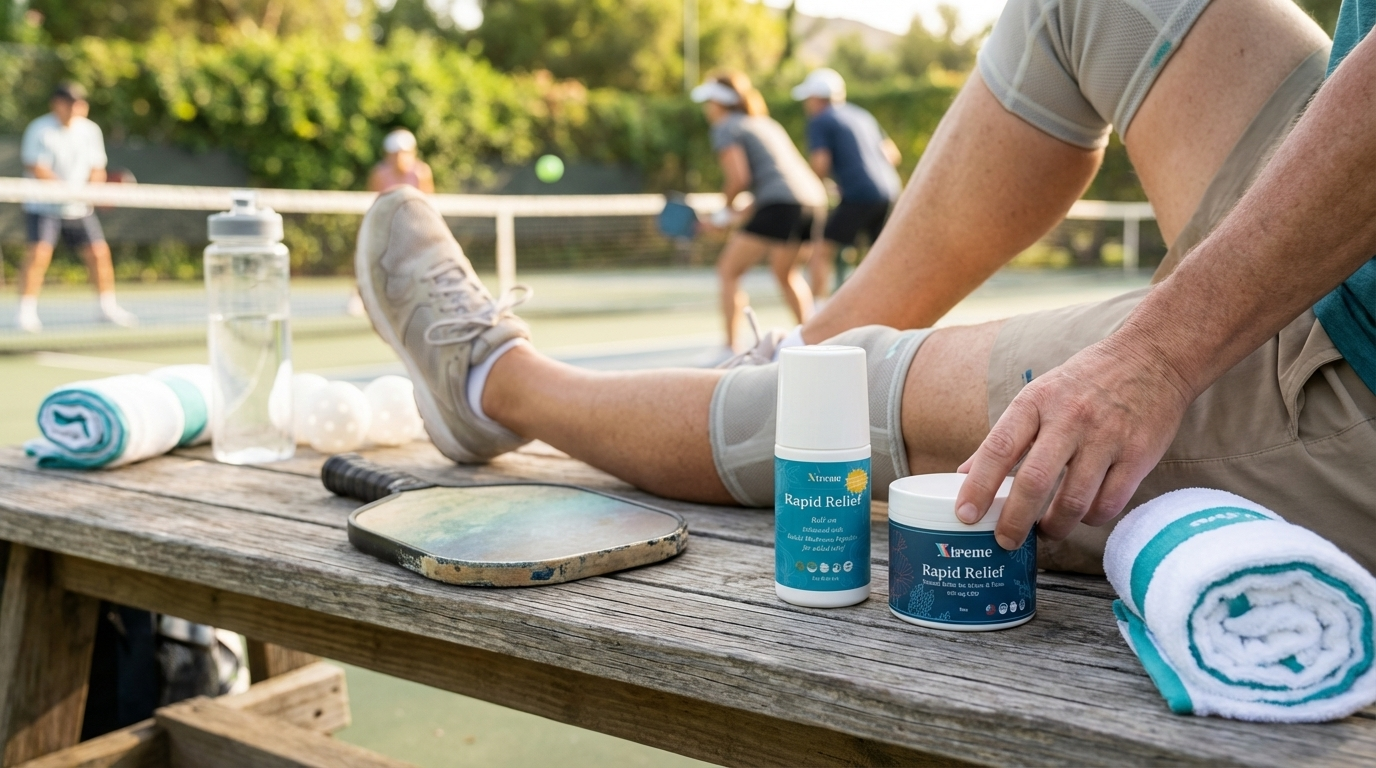
Pickleball is fun for the exact reason it can leave you feeling beat up.
Quick starts. Sudden stops. Reaching overhead. Twisting through your hips. Repeating that same shoulder swing and knee bend over and over.
That adds up fast, especially if you are playing a few times a week, getting back into movement, or trying to stay active after 40 without feeling wrecked the next morning.
If your knees and shoulders are the first thing to complain after a match, the goal is not to stop moving. The goal is to recover smarter so you can stay in the game.
Why pickleball hits knees and shoulders so hard
Pickleball may look low-impact compared to other court sports, but it still puts real stress on joints and soft tissue.
Your knees absorb quick changes in direction, short sprints, lunges, and repeated bending. Your shoulders take on repetitive overhead motion, fast reactions, and follow-through strain. According to Hinge Health, knee pain in pickleball is often tied to overuse, tendon irritation, muscle imbalance, or sudden movement patterns. The American Academy of Orthopaedic Surgeons has also warned that pickleball injury risk has climbed sharply as the sport has exploded in popularity, especially for older adults.
That does not mean pickleball is the problem.
It means your recovery routine matters.
What helps sore knees and shoulders after pickleball
The best recovery plan is usually simple.
You do not need a two-hour wellness ritual. You need a few steps you will actually use.
1. Cool down instead of stopping cold
If you finish a game and immediately sit in the car or head to the couch, your body tends to tighten up even more.
A short walk, gentle mobility work, and easy stretching can help your body come down without that abrupt stop. This is especially useful when your knees feel stiff or your shoulders feel loaded after repeated swings.
2. Use targeted relief on the spots that flare up first
When soreness is local, targeted support makes more sense than a vague full-body plan.

Rapid Relief Roll-On is built for smaller, stubborn areas that need quick, easy application. It is especially useful when you want hands-free support on the go. Knees, shoulders, forearms, and the spots that start talking back after a match are exactly where a roll-on fits best.

Rapid Relief Balm is a strong follow-up when you want more hands-on coverage for knees, shoulders, lower back, or any area holding tension after play. It is built for the areas that need a little more attention before or after activity.

If your soreness tends to hit in multiple places, the Recovery Bundle gives you a layered approach you can use at home or keep in your routine throughout the week.
3. Respect inflammation without panicking over every ache
Not every sore knee or shoulder means you are injured. Sometimes your body is just responding to workload.
That said, recovery works better when you pay attention early. If a movement keeps causing the same pain, if swelling shows up, or if your range of motion drops off, that is your signal to back off and take it seriously.
4. Add recovery between games, not just after bad ones
One of the biggest mistakes recreational athletes make is waiting until soreness gets loud.
A better move is to build a small routine between games:
-
light movement later the same day
-
hydration
-
gentle mobility for knees, hips, chest, and shoulders
-
targeted topical support where you usually get tight
-
enough sleep to actually recover
Mayo Clinic notes that practical recovery habits like massage and cold exposure may help reduce soreness and fatigue after tough activity. You do not need every recovery tool at once. You just need consistency.
A simple pickleball recovery routine you can actually stick with
Here is a realistic post-game flow:
Right after your match
-
Walk for 5 to 10 minutes
-
Do a few easy quad, hamstring, chest, and shoulder stretches
-
Apply Rapid Relief Roll-On to knees or shoulders if you want fast, no-mess support
Later that evening
-
Use Rapid Relief Balm on the spots still holding tension
-
Keep moving lightly instead of locking up on the couch all night
-
Hydrate and give your body a real recovery window
On non-game days
-
Keep your joints moving
-
Build in basic mobility work
-
Use targeted support early instead of waiting until soreness gets worse
When soreness might be more than soreness
If pain is sharp, keeps getting worse, includes major swelling, or changes how you move, do not brush it off. That is different from normal post-game soreness and deserves proper attention.
If what you are dealing with is the usual pickleball aftermath: stiff knees, tight shoulders, and that worked-over feeling the next morning, a smarter recovery routine can go a long way.
The goal is not less movement. It is better bounce-back.
Pickleball is supposed to help you stay active, social, and strong.
Your recovery should support that.
If your knees and shoulders need more help after match day, start with tools that fit real life and are easy to use consistently.
Explore Rapid Relief Roll-On for targeted support, Rapid Relief Balm for hands-on recovery, or the Recovery Bundle if you want a more complete routine.
And if you want more practical ways to recover better, read How to Relieve Sore Muscles: What Actually Works.
Share:
How to Sleep Better: What Actually Keeps You Awake (And How to Fix It)
Natural Sleep Support Without Feeling Groggy